• 303-953-4111
    • |
      Become A Client
    • Shopping Cart Demo Website
      • HOME
      • SERVICES
      • ONLINE PROGRAMS
        • College Students Eating Habits
        • Preventing Eating Issues
        • Recovery Roadmap For Parents
      • SPECIALTIES
        • Digestive Health
        • Eating Disorders | Disordered Eating
        • Medical Nutrition Therapy
        • Non-Diet Approach to Health and Wellness
        • Nutrition and Mental Health
        • RDN Supervision
      • ANNOUNCEMENTS
      • RESOURCES
        • FAQs
        • Media | Podcasts
        • Client Testimonials
        • Resource Links
      • ABOUT
        • Jane Reagan Bio
        • My Philosophy
        • Claire Berens Bio
        • RDN Supervision
      • CONTACT
      • 

Family Meals Are The Foundation For Eating Disorders Prevention - August 2024

Family Meals Are The Foundation For Eating Disorders PreventionWhat’s New And Why It’s Confusing
Family meals play a crucial role in a child’s development, offering numerous benefits that go beyond just nutrition.

Sitting down for meals together as a family creates a structured environment that encourages a sense of security and belonging. This routine can help children develop healthier eating habits, as they are more likely to consume a variety of nutrient-rich foods such as fruits, vegetables, and wholegrains when eating with family. This routine of healthy eating is then more likely to continue into adulthood.

Furthermore, by having family meals, parents can model healthy eating behaviors to their children, demonstrating portion control and balanced meal choices and enjoyment with eating without explicitly having to teach and discuss these positive behaviors.  Family meals help establish regular meal patterns and predictability which can help decrease your child's anxiety.

Engaging in regular family meals also encourages children to try new foods and reduces picky eating tendencies. The conversations that occur during these meals also enhance children’s communication skills, emotional intelligence, and language development, contributing to their overall well-being and mental acuity.

In addition to promoting general health, family meals are instrumental in the prevention of eating disorders.

The positive environment created during family meals helps your child build a healthy relationship with food, reducing the risk of them developing eating disorders.


Studies have shown that children who participate in frequent family meals are less likely to engage in unhealthy dieting behaviors and are more resilient to societal pressures regarding body image.
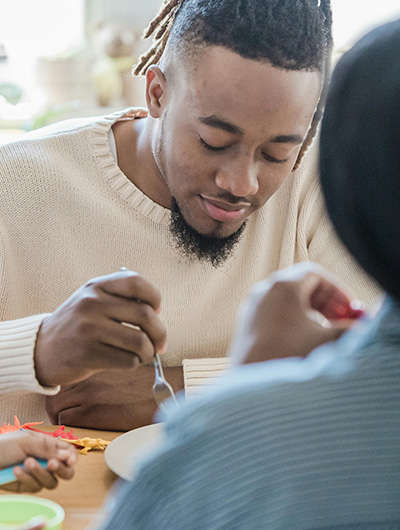

 family meals are essential for helping your child develop a healthy relationship with food

While family meals are essential for helping your child develop a healthy relationship with food, it's important not to impose rigid rules on them simply because you are following a specific diet. Additionally, avoid making negative comments about your own or others' eating habits.

Although parents do not directly cause their child to develop an eating disorder, their behaviors can influence and trigger their child

Your child will emulate your actions so be mindful of what is said and how you act around your child in regards to your own views on eating, foods and body image.

Regular family meals also provide parents with an opportunity to observe their children’s eating habits and attitudes toward food, enabling early detection of potential issues related to disordered eating.

Overall, family meals play a vital role in nurturing positive views about eating, encouraging healthy eating habits, and helping to prevent the development of eating disorders in your child.

6 More Ways You Can Create A Positive Food Environment In Your Home.

1) Listen more than you talk when discussing issues your child may be having with eating or body image.

2) Encourage healthy habits and activities without focusing on your child's weight or appearance.

3) Educate your child on the inaccurate body image that is portrayed on social media, in movies and on TV.

4) Compliment your child on their successes frequently and avoid comments about their eating habits or appearance.

5) Lead by example with positive eating, nutrition and fitness behaviors but and do not force your diet rules or exercise regimes on your child.

6) Educate your child on the importance of balanced nutrition and not following the latest food or diet fads that they see on social media.

Recovery Inspiration

Weekly Recovery Inspiration

S. was in the throws of her restrictive eating.

She felt a lot of shame around food, especially if someone else was in the room. 

She didn’t want to eat with her parents.  She just wanted to be alone.  If she made food, she would often bring it to her bedroom and eat by herself in isolation. 

She constantly judged herself, her food and her body and she didn’t want other people judging her. 

However, after much nutritional counseling, personal insights and consistently challenging food rules and inaccurate nutrition information, she became more willing to eat with her family. 

She started to join them for regular meals and soon realized that she felt a much needed sense of connection, something she hadn’t felt in a long time. 

She realized that other family members were eating a variety of foods and seemingly appeared unaffected by it. 

She told me “Maybe it’s ok to eat these foods”. 

She started talking about her day at school and her times with friends. Although she still experienced some challenging meals, she was able to become more grounded, felt less fear and enjoyed the connection she so desperately needed.

Kind regards,


  How I Can Help

Whether you're working on improving your health, your nutrition, your relationship with food or navigating something more complex, I'm here to help.

For individuals looking for one-on-one nutrition guidance, for a variety of health issues, grounded in science, balance, and compassion: I see clients in my Boulder, CO practice and remotely.

My Online Programs
Preventing Eating Issues

For anyone of any age: My “Preventing Eating Issues” program provides practical tools for building a healthy, sustainable relationship with food.

Eating Disorder Recovery Roadmap For Parents

For parents with a child struggling with disordered eating: My “Eating Disorder Recovery Roadmap For Parents” online program brings decades of in-person nutritional and counseling expertise to a remote learning environment, so you can understand and successfully navigate the journey to recovery no matter where you live.

College Eating Habits

For college students that are wondering if their eating is “normal”, a “bad habit”, “disordered” or an “eating disorder” and how to get help in college, check out my College Eating Habits workshop.
    • Jane Reagan Nutrition
      Newsletter Sign-up

      * indicates required
      • About Jane
      • My Philosophy
      • Associates
      • Services
      • Specialties
      • RDN Supervision
      • FAQs
      • Resources
      • Testimonials
      • Contact
      • Privacy
      • Prevention Program
      • Parents Program
      • College Students Program
    • Jane Reagan, MED, RDN, CEDS-C

        • 1949 Pearl Street
          Boulder, CO 80302
        •  1-303-953-4111
        •  1-303-330-0396 (fax)
        •  [email protected]
        • FacebookInstagramLinkedIn Youtube
        • Jane Reagan Nutrition
        • Jane Reagan Nutrition provides in-person nutrition counseling at our Boulder, CO offices and virtual appointments for Colorado, Minnesota, Illinois and Wyoming residents as well as many other states. Contact us to schedule an appointment.
  • © Copyright 2026.  Jane Reagan Nutrition LLC. Boulder, CO. All Rights Reserved. Terms Of Use.
▲